How Long Does It Take to Build a Website?
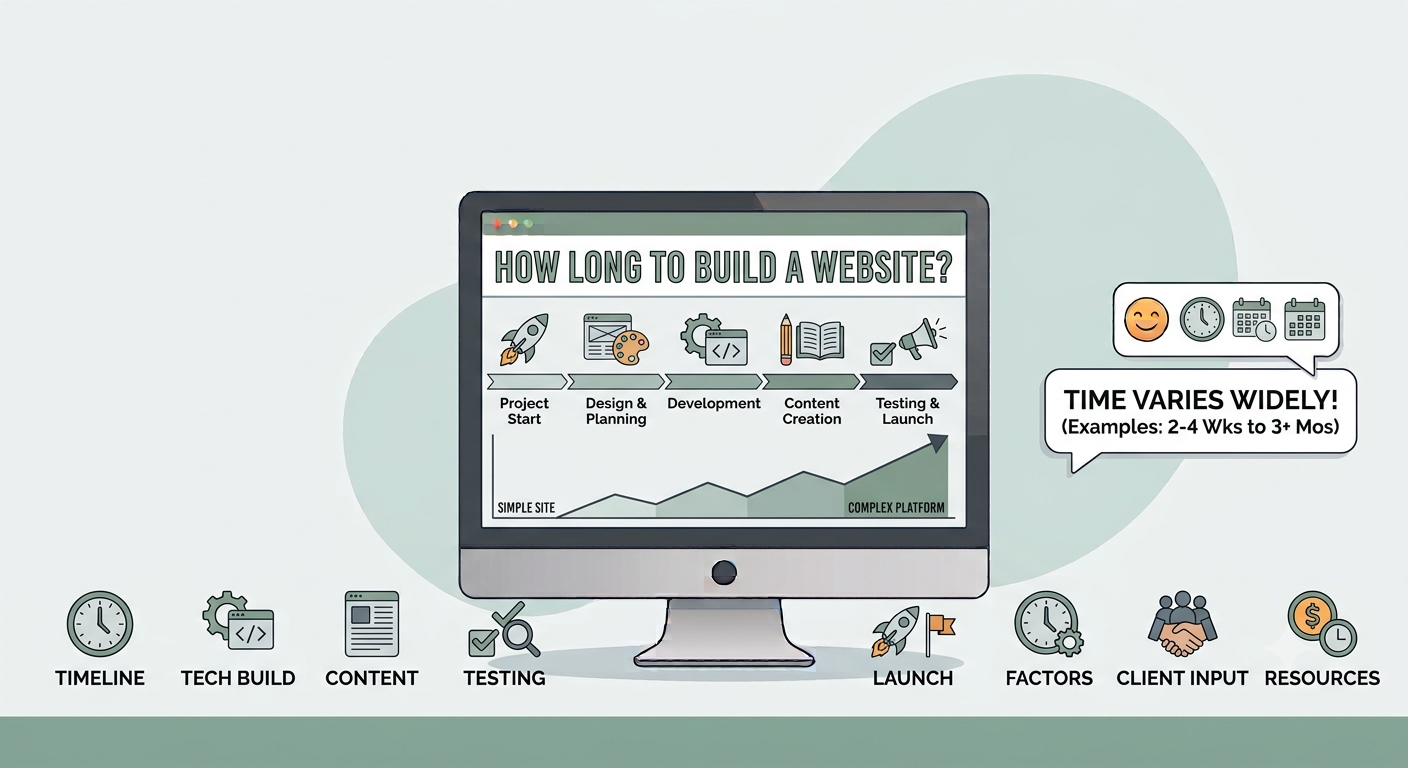
Building a website takes 4 to 12 weeks for most service businesses. The number of pages, the complexity of the build, and how quickly content gets approved all shape the timeline. What most business owners don't expect is that the biggest delays rarely come from the designer. They come from the client side. Here is what actually controls a website timeline and what you can do to move faster.
What is the average time to build a website?
For most service businesses, expect 4 to 6 weeks for a straightforward 5 to 8 page site. Larger sites with custom pages, integrations, or a heavy content load typically run 8 to 12 weeks. These timelines cover strategy, design, content integration, revision rounds, quality assurance, and launch prep. Skipping any of those phases tends to create problems after launch that cost more to fix than they would have to include from the start.
What factors affect how long a website takes to build?
Four variables control most timelines.
How many pages does the site need?
A 5-page site and a 20-page site are not the same scope. Each page requires design work, content, internal linking, and a review round. More pages mean more decisions, more phases, and more chances for delays to compound.
How ready is the content before the project starts?
This is the single biggest timeline factor in most builds. Designers can build structure before content arrives, but they cannot finalize pages without copy, photos, and supporting assets. Builds stall for weeks when clients haven't prepared this in advance. Coming to kickoff with content drafted consistently saves more time than anything else you can do on your end.
How many rounds of revisions are in the plan?
One organized round of revisions is standard and built into most project timelines. Scattered feedback delivered piecemeal over several weeks adds significant time. Collect all feedback in a single pass and give your designer one clear round to execute changes.
Does the site need custom functionality?
Booking systems, client portals, API integrations, and custom calculators each require additional build time. Budget 2 to 4 extra weeks per complex feature. If your site needs these, plan for the longer end of the timeline before the project starts rather than discovering the gap midway through.
Why does a website build take so long?
A professional build has more phases than most clients expect. Discovery and strategy, sitemap planning, design mockups, development, content integration, cross-device testing, SEO setup, and a final revision round before launch. Each phase depends on the one before it. When one step slows down, every step after it shifts. A build that looks like it should take four weeks often takes nine because of compounding delays across phases that are hard to see from the outside.
What slows down a website build the most?
Missing or late content is the most common reason. It happens on nearly every project where the client hasn't prepared before kickoff. The second most common issue is too many decision-makers on the client side with no clear approval authority. When three people need to sign off and they disagree, revision rounds multiply. Designating one point of contact with final approval removes this problem entirely and keeps the project moving on schedule.
How long does it take to build a website for a service business in Jacksonville?
For a Jacksonville service business, a professional 6 to 8 page website typically takes 5 to 7 weeks from kickoff to launch. That includes initial strategy, design, content integration, a revision round, quality assurance, and launch. If the site also needs local SEO setup, schema markup, Google Business Profile integration, and lead tracking configured from day one, add a week. Sites that combine design and SEO from the start rank faster and require less rework later. Our website design services for Jacksonville businesses are structured to include both so you're not rebuilding the SEO foundation six months after launch.
If you want to know what each page of your site needs before the build starts, this guide walks through every page a service business website needs and what to include on each one.
Can a website be built in less than two weeks?
A website can be built in under two weeks, but with real tradeoffs. Fast-turnaround builds typically use pre-built templates with limited customization, require all content delivered before day one, allow for one or zero revision rounds, and cannot include custom functionality. For a placeholder page or an interim site while your full site is being built, a two-week build makes sense. For your main marketing site, rushing almost always means rebuilding sooner than you planned.
What should you have ready before a website build starts?
The clients who reach launch fastest share three things. They deliver all written copy before design starts. They provide professional photos, logo files, and brand assets in one shared folder on day one. And they designate one person with authority to approve decisions. Removing the feedback bottleneck on your end consistently cuts 2 to 3 weeks from a build timeline. For a detailed breakdown of what each page needs, see what should be on a business website.
How do you know if your new website will generate leads?
A fast launch means nothing if the site doesn't convert visitors into inquiries. Most service business websites look polished but miss the specific structural elements that drive phone calls and form fills. Before you go live, work through why service business websites don't get leads and what to fix first. If your site is already live and the phone isn't ringing, the issue is almost always structural. And if you want your site to rank in Jacksonville search results from launch day, the local SEO guide for Jacksonville service businesses covers how to set it up correctly from the start.
Is it better to build a new website or redesign an existing one?
A redesign is faster when the existing site has solid structure and the main problem is outdated design or weak content. A full rebuild makes more sense when the platform is limiting what you can do, the SEO structure needs to start over, or the site's performance is actively hurting your rankings. For Jacksonville service businesses trying to compete in local search, the technical foundation matters as much as how the site looks. If your current site is hard to update, slow to load, or built on a platform your team can't manage, a rebuild is worth the extra weeks. A strategy conversation before committing to either path can save a significant amount of time and budget.
Frequently Asked Questions
How long does it take to build a website?
Most professionally built websites take 4 to 12 weeks depending on the number of pages, site complexity, and how quickly the client provides content. A 5 to 8 page service site typically takes 4 to 6 weeks. Larger sites with custom functionality take 8 to 12 weeks or more.
What slows down a website build the most?
Missing or late content from the client is the most common reason builds take longer than expected. Designers cannot finalize pages without approved copy, photos, and brand assets. Having everything ready before kickoff consistently shortens timelines by 2 to 3 weeks.
How long does it take to build a website for a service business?
For most service businesses, a professional 6 to 8 page site takes 5 to 7 weeks from kickoff to launch, including strategy, design, content integration, revisions, and launch prep.
Can a website be built in a week?
Yes, but with significant tradeoffs. Fast-turnaround builds use templates, require all content upfront, allow limited revisions, and skip custom features. For a primary marketing site, this approach usually leads to a rebuild within 12 to 18 months.
What should I have ready before a website build starts?
Have all written copy, professional photos, logo files, and brand assets prepared before the kickoff call. Designate one person with approval authority on your team. These steps alone cut 2 to 3 weeks from a typical project timeline.
Does website design affect SEO?
Yes. Site structure, page speed, mobile usability, heading hierarchy, and internal linking all affect how a site ranks. Sites built with SEO in mind from the start rank faster for target terms and require significantly less rework after launch.
Want the full picture? See the complete guide: Website Design for Jacksonville Businesses: The Complete Guide
Popular Marketing Articles